Inflation is the general increase in the prices of goods and services over time. When inflation occurs, the same amount of money typically buys fewer things than it did before, reducing your purchasing power. It can affect everyday expenses such as groceries, rent, transportation, healthcare, and utilities.
In the United States, inflation is commonly measured using price indexes that track changes in the cost of a representative group of goods and services. Understanding inflation can help explain why household expenses change, why wages do not always keep up with rising prices, and why the value of savings can change over time. Although some price increases are temporary or limited to specific products, sustained inflation affects the broader economy and household budgets.
1. What Is Inflation?
Inflation is a broad increase in the overall price level of goods and services in an economy over time. It does not mean that every product becomes more expensive at the same rate. Some prices may rise quickly, others may increase slowly, and some may even fall.
For example, the price of groceries might rise while the price of certain electronic products stays relatively stable. Inflation describes the general movement of prices across the economy rather than the price change of one individual item.
Inflation is usually expressed as a percentage change over a period, such as a month or a year. When people hear that inflation is increasing, they are generally hearing that prices are rising at a faster rate than before.
It is also important to distinguish inflation from the price level. If inflation slows, prices may still be increasing, but more slowly. A broad decline in prices is called deflation, which is different from a slowdown in inflation.
2. What Is Purchasing Power?
Purchasing power refers to the amount of goods and services that money can buy. It helps explain what a dollar is worth in practical terms.
When prices rise but the amount of money you have stays the same, your purchasing power decreases. You may need more dollars to purchase the same groceries, pay for the same services, or cover the same household expenses.
Hypothetical Example: The Changing Value of $100
Imagine a household spends $100 on a particular group of groceries. Over time, the prices of those same items increase by 10%.
The same grocery basket now costs $110. The household needs an additional $10 to purchase exactly the same items.
Although the household still has $100, that money no longer covers the entire basket. Its purchasing power has declined relative to those grocery prices.
This example illustrates why inflation matters even when the number printed on a paycheck or in a bank account does not change.
Inflation and the Value of a Dollar
Inflation reduces the amount of goods and services a dollar can purchase over time. This does not mean that the dollar itself changes physically. Instead, its buying power changes because the prices of goods and services have increased.
The U.S. Bureau of Labor Statistics (BLS) explains that the purchasing power of the consumer’s dollar declines as prices increase.
3. How Is Inflation Measured in the United States?
Economists use price indexes to measure inflation. These indexes track price changes across groups of goods and services rather than relying on the price of a single item.
Two commonly discussed measures in the United States are the Consumer Price Index (CPI) and the Personal Consumption Expenditures (PCE) Price Index.
Consumer Price Index (CPI)
The Consumer Price Index is produced by the U.S. Bureau of Labor Statistics. It measures the average change over time in prices paid by consumers for a representative basket of goods and services.
The CPI covers categories such as:
- Food and beverages
- Housing
- Transportation
- Medical care
- Clothing and apparel
- Recreation
- Education and communication
- Other goods and services
The BLS uses information about consumer spending and collects prices to estimate how the cost of this basket changes over time. The CPI is widely reported and commonly used to describe consumer inflation.
However, the CPI is an average measure. It does not represent the exact spending patterns or price changes experienced by every household.
Personal Consumption Expenditures (PCE) Price Index
The PCE Price Index is produced by the Bureau of Economic Analysis (BEA). It measures changes in prices for goods and services purchased by or on behalf of people in the United States.
The Federal Reserve closely monitors the PCE Price Index when evaluating inflation. It differs from the CPI in its coverage and calculation methods, including how it accounts for changes in consumer spending patterns.
Both indexes provide useful information, but they are not interchangeable. Their results may differ because they measure consumer prices using different approaches.
4. What Causes Inflation?
Inflation can develop for several reasons. In many situations, multiple factors contribute to rising prices at the same time.
Demand-Pull Inflation
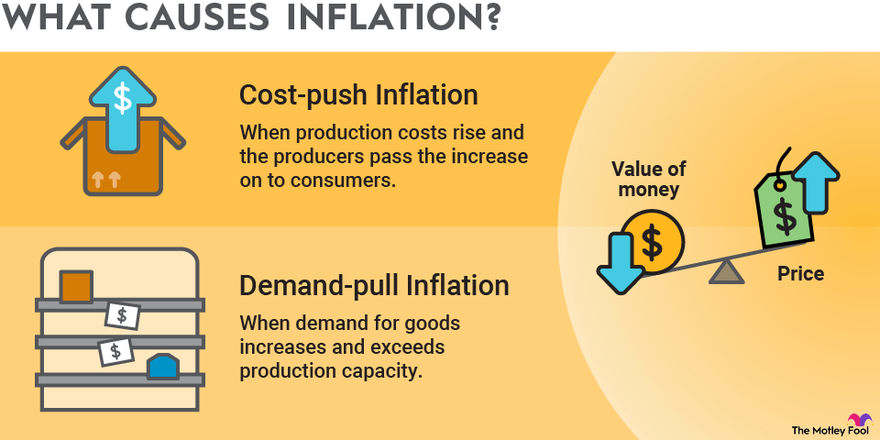
Demand-pull inflation can occur when demand for goods and services grows faster than businesses can supply them.
For example, imagine many households decide to purchase new vehicles at the same time. If manufacturers and dealerships cannot increase available supply quickly enough, vehicle prices may rise.
Strong consumer spending, business investment, and government spending can contribute to higher overall demand. The effect depends on available production capacity and broader economic conditions.
Cost-Push Inflation
Cost-push inflation occurs when businesses face higher costs for producing or delivering goods and services.
These costs may include:
- Raw materials
- Labor
- Energy
- Transportation
- Rent and operating expenses
For example, if fuel and transportation costs rise, companies that move products across the country may face higher operating expenses. Some businesses may pass part of those costs to customers through higher prices.
Supply Disruptions
Unexpected events can interfere with the production or distribution of goods. Severe weather, natural disasters, transportation problems, and international disruptions may reduce supply or make products more expensive to deliver.
When available goods become harder to obtain while demand remains strong, prices may increase.
Monetary and Financial Conditions
Broader financial conditions can also influence inflation. Interest rates, lending, credit availability, and the amount of spending in the economy can affect overall demand.
The Federal Reserve uses monetary policy to support its goals of maximum employment and stable prices. Its decisions can influence borrowing costs and economic activity, although policy effects generally take time to work through the economy.
5. How Does Inflation Affect Your Household Budget?
Inflation can influence nearly every part of a household budget, but the impact depends on what a household buys, where it lives, and how its income changes.
Groceries and Everyday Expenses
Food prices can change because of weather, transportation costs, production expenses, and other supply and demand conditions.
When grocery prices rise, a household may spend more to purchase the same items. This can leave less money available for other expenses, savings, or unexpected costs.
Housing and Utilities
Housing-related expenses can also be affected by inflation. Rent, maintenance, building materials, insurance, and utility costs may change over time.
The effect varies depending on whether someone rents, owns a home with a fixed-rate mortgage, or has housing expenses that adjust periodically. A fixed mortgage payment, for example, does not automatically increase just because general consumer prices rise, although other ownership expenses may change.
Transportation and Healthcare
Fuel, vehicle repairs, public transportation, medical services, and prescription-related expenses can all contribute to household price changes.
Some categories may rise faster than the overall inflation rate, while others may rise more slowly. This is one reason two households can experience different changes in their monthly budgets.
Hypothetical Example: A Household Budget
Imagine a household has monthly expenses of $3,000. Over time, the prices of the goods and services it regularly purchases increase by 5%.
If the household’s spending pattern remains unchanged, those expenses would require approximately $3,150 per month.
The additional $150 represents the higher cost of maintaining the same purchasing pattern. This is an illustration, not a prediction of how every household’s expenses will change.
6. How Does Inflation Affect Wages, Savings, and Debt?
Inflation can affect more than shopping expenses. It can also influence the real value of income, savings, and debt.
Wages and Real Income
Your paycheck represents nominal income: the actual dollar amount you receive. Real income measures that income after accounting for changes in prices.
If wages rise more slowly than inflation, purchasing power may decline. If wages increase faster than inflation, purchasing power may improve, assuming other relevant factors remain unchanged.
For example, a worker who receives a raise may still find that the increase does not cover higher living expenses. The difference between nominal wage growth and inflation helps explain why a larger paycheck does not always mean greater buying power.
Savings
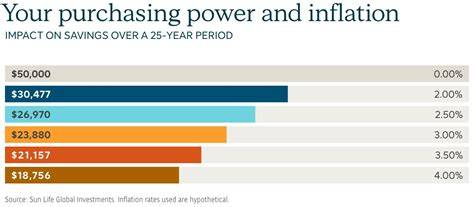
Inflation can reduce the purchasing power of money held in savings if the money does not earn enough to offset rising prices.
For example, imagine someone keeps $1,000 in an account and earns no interest. If the prices of the goods and services that person buys increase over time, the $1,000 may purchase less than it did previously.
Interest earned on savings can help offset some of inflation’s effects, but the result depends on the account’s return, inflation, taxes, and other factors.
Debt
Inflation can affect borrowers and lenders differently.
When someone has a fixed-rate loan, the required payment generally remains the same even if the general price level rises. If that person’s income also increases, the payment may become smaller relative to income.
However, income does not always rise with inflation. Borrowers may also face variable interest rates, changing expenses, and other financial pressures. Inflation therefore does not automatically make debt easier to manage.
7. How Can People Understand and Track Inflation?
Understanding inflation starts with recognizing that national averages may not match an individual household’s experience.
The CPI measures average price changes for a representative group of consumer expenses. A household that spends a larger share of its income on housing, healthcare, or transportation may experience a different pattern of price increases.
A few concepts can help make inflation reports easier to interpret:
- Inflation rate: The percentage increase in a price index over a selected period.
- Monthly inflation: The change in prices compared with the previous month.
- Annual inflation: The change in prices compared with the same period in the previous year.
- Core inflation: A measure that excludes certain categories, commonly food and energy, to help examine underlying price trends.
- Real income: Income adjusted for inflation to show changes in purchasing power.
The BLS publishes CPI information, explanations, and an inflation calculator. The BEA publishes PCE price index information, while the Federal Reserve explains how inflation measures inform its assessment of the economy.
These resources can help readers understand changes in prices without assuming that one national figure describes every household’s experience.
Key Takeaways
- Inflation is a general increase in the prices of goods and services over time.
- Purchasing power describes how much money can buy; it generally declines when prices rise.
- The Consumer Price Index and PCE Price Index are important measures used to track inflation in the United States.
- Inflation can result from strong demand, rising production costs, supply disruptions, and broader economic conditions.
- Its effects on wages, savings, debt, and household expenses depend on individual circumstances and how income and financial arrangements change.
Frequently Asked Questions
1. What is inflation in simple terms?
Inflation means that prices across the economy are generally rising over time. When this happens, the same amount of money usually buys fewer goods and services than before. Inflation is measured using price indexes that track changes in groups of products and services rather than the price of just one item.
2. What happens to purchasing power when inflation rises?
When prices rise, each dollar generally buys less than it did previously. For example, if a group of household items costs $100 and later costs $110, the original $100 no longer covers the same purchases. The actual effect depends on which prices increase and how a household spends its money.
3. What is the difference between inflation and deflation?
Inflation is a general increase in the overall price level, while deflation is a broad decline in prices over time. Disinflation is different: it means inflation is slowing, so prices are still rising but at a slower rate. These terms describe different economic conditions and should not be used interchangeably.
4. Why does the government measure inflation?
Government agencies measure inflation to understand changes in prices and the economy. Inflation data can inform monetary and fiscal policy, economic research, and adjustments to certain payments or financial measures. The CPI and PCE Price Index provide different perspectives on price changes and help policymakers and the public evaluate economic conditions.
5. Does inflation affect everyone equally?
No. Inflation affects households differently because people have different spending patterns, incomes, locations, and financial obligations. A household spending a large share of its budget on rent or transportation may experience different cost increases from a household with different expenses. National inflation statistics are averages, not exact measurements of every person’s cost of living.
Conclusion
Understanding what inflation is and how it affects purchasing power helps explain why the cost of everyday life changes over time. Rising prices can affect groceries, housing, transportation, healthcare, wages, savings, and debt. The impact is not identical for every household because spending patterns and income changes differ. Measures such as the Consumer Price Index and PCE Price Index provide useful ways to track broader price trends, but they do not describe every individual’s experience. Learning how these measures work makes economic news and changes in household expenses easier to understand.
Sources and Further Reading
- U.S. Bureau of Labor Statistics (BLS): Consumer Price Index Frequently Asked Questions
- U.S. Bureau of Labor Statistics (BLS): Overview of BLS Statistics on Inflation and Prices
- U.S. Bureau of Labor Statistics (BLS): Income and the Consumer Price Index
- Federal Reserve: What Is Inflation, and How Does the Federal Reserve Evaluate Changes in the Rate of Inflation?
- Bureau of Economic Analysis (BEA): Personal Consumption Expenditures Price Index
Disclaimer
Disclaimer: This article is for educational purposes only and is not financial, investment, tax, or legal advice. The information provided is general in nature and does not consider your personal circumstances. We make no guarantees, promises, or representations about returns, profits, savings, credit outcomes, or any other results. All examples are hypothetical and for illustration only. Financial rules, interest rates, tax brackets, contribution limits, and fees change over time, so this article does not state current figures; please check official sources such as IRS.gov, SEC.gov, Investor.gov, CFPB, or the Federal Reserve for the latest information. Consult a qualified professional, such as a certified financial planner, tax professional, or attorney, before making financial decisions.
About the Author: [Author Name] is [credentials/experience in finance, writing, or research]. [One or two sentences about expertise.]