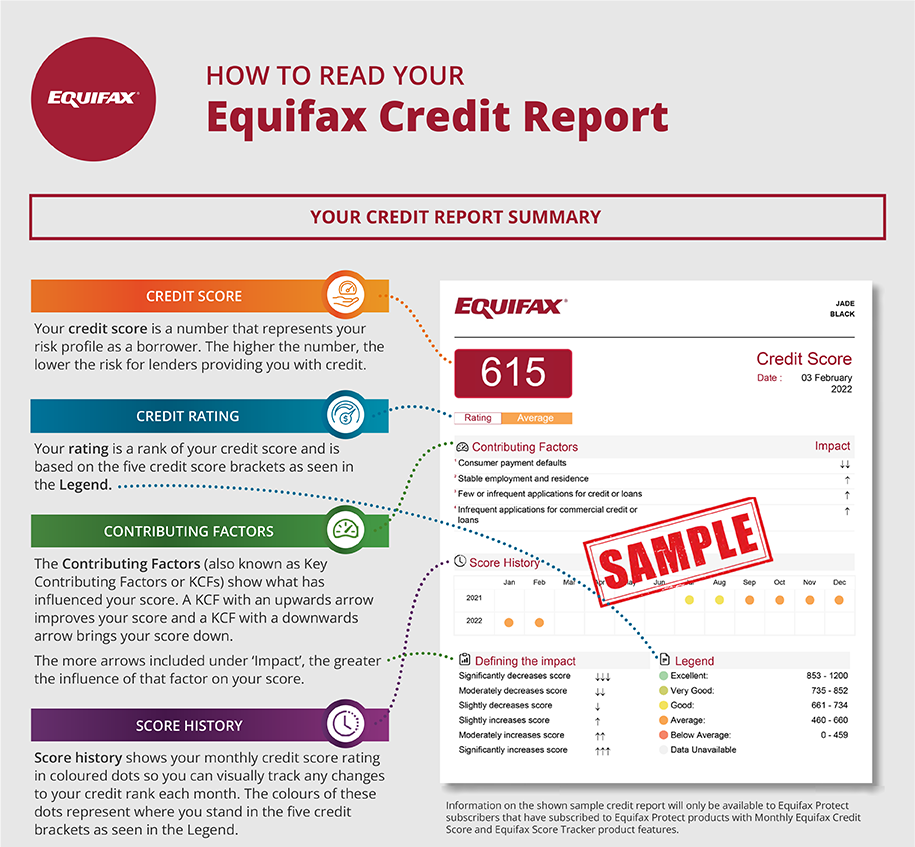
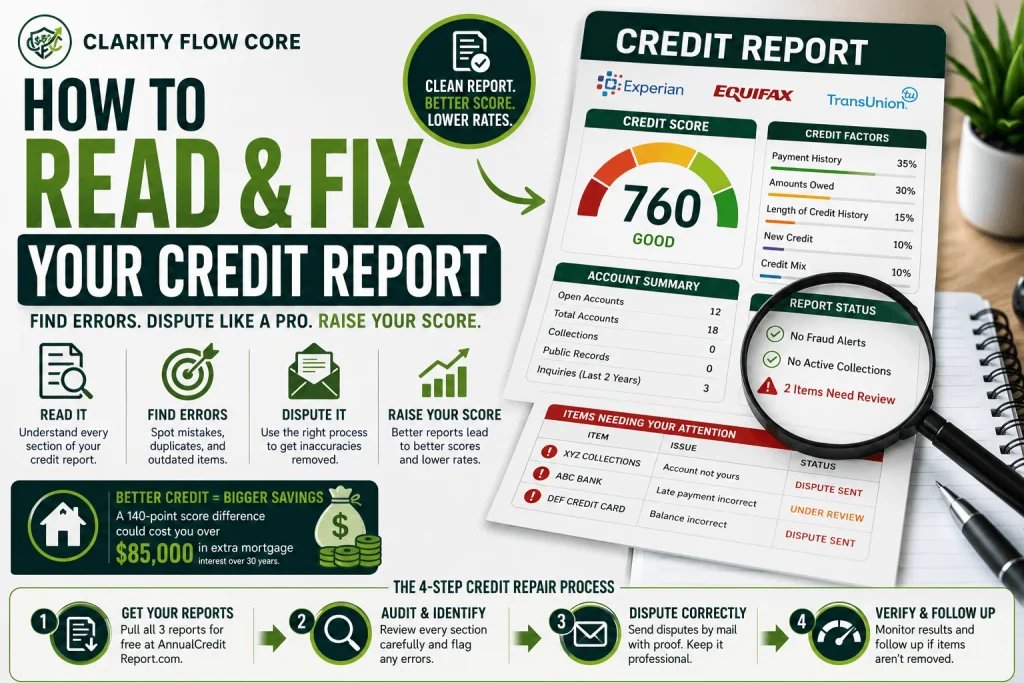
A credit report is a record of your borrowing and credit-related activity. It shows information such as credit cards, loans, payment history, account balances, and certain public records. In the United States, credit reporting companies collect this information and organize it into reports that lenders and other permitted organizations may use when evaluating applications.
Reading a credit report can help you understand what information businesses see when they review your credit history. It can also help you identify inaccurate accounts, unfamiliar activity, or outdated details. Although a credit report is closely connected to your credit score, the two are not the same. Understanding each section makes it easier to review your financial information and recognize potential reporting errors.
1. What Is a Credit Report?
A credit report is a detailed summary of information about how you have used credit. It may include your credit cards, mortgages, auto loans, student loans, payment records, collection accounts, and other credit-related information.
In the United States, three nationwide credit reporting companies maintain consumer credit files:
- Equifax
- Experian
- TransUnion
These companies, commonly called credit bureaus, receive information from lenders, credit card issuers, debt collectors, and other organizations that report account activity.
Your reports may not be identical. A lender might send information to one, two, or all three credit bureaus. Companies may also update their records at different times. As a result, an account or balance could appear differently across reports.
Credit reports can be used for more than loan applications. Depending on the circumstances and applicable law, information may also be considered for rental applications, insurance decisions, or certain employment-related decisions. The organization requesting the report must have a legally permitted purpose.
2. Credit Report vs. Credit Score: What Is the Difference?
A credit report and a credit score are related, but they serve different purposes.
A credit report contains the underlying information about your credit history. A credit score is a numerical calculation based on information in a credit report and a particular scoring model.
For example, a report may show that you have two credit cards, an auto loan, a history of payments, and a current balance. A scoring model may use relevant details from that information to calculate a score.
There is no single credit score that every lender must use. Scores can vary depending on the credit bureau, scoring model, type of credit being evaluated, and the date the score is calculated.
It is also possible to have a credit report without having a commonly used credit score. This may happen when someone has limited credit history or when the available information does not meet a scoring model’s requirements.
The important distinction is that a credit report is the record, while a credit score is one way of evaluating information in that record. Reviewing the report helps you understand the details behind a score. The Consumer Financial Protection Bureau explains this distinction in its consumer guidance.
3. What Information Appears on a Credit Report?
Although layouts differ between credit bureaus, most reports contain several common sections.
Personal Information
This section identifies the consumer associated with the report. It may include:
- Full name and previous names
- Current and former addresses
- Date of birth
- Social Security number, sometimes partially displayed
- Phone numbers
- Employment information, when available
This information is generally used to identify and match your credit file. An old address or previous name does not automatically mean something is wrong.
However, unfamiliar personal details may indicate a mixed credit file, where information belonging to another person has been combined with yours. Incorrect identifying information should be reviewed.
Credit Accounts
This section lists credit accounts reported by lenders and other financial institutions. Accounts may include revolving credit, such as credit cards, and installment credit, such as auto loans or mortgages.
A typical account entry may show:
- Creditor or account provider
- Account type
- Date the account was opened
- Current balance
- Credit limit or original loan amount
- Payment status
- Account ownership
- Date the account was closed, if applicable
Check whether the accounts belong to you and whether their balances and statuses appear reasonable.
Payment History
Payment history shows how accounts have been paid over time. Depending on the report, it may use monthly symbols, status codes, or descriptions to show whether payments were made as agreed or reported late.
A late payment may remain visible even after an account becomes current. The report may also show accounts that were charged off or sent to collections.
Review the payment timeline carefully. A payment marked late when you paid on time could be an error worth investigating.
Collection Accounts and Public Records
A collection account may appear when a debt is transferred or assigned to a collection agency. The report may identify the collection company, account information, balance, and status.
Certain public-record information may also appear. Bankruptcy information is one example. Not every public record appears on every report, and reporting rules can vary by information type.
Credit Inquiries
An inquiry records when someone accesses your credit file. Reports generally distinguish between hard inquiries and soft inquiries.
These sections provide different types of information, so it is useful to review each one rather than focusing only on the account balances.
4. How to Read a Credit Report Step by Step
Credit reports can look complicated because they use abbreviations, account codes, and different layouts. A systematic review can make the information easier to understand.
Step 1: Confirm Your Personal Details
Start with your name, address history, and other identifying information. Look for misspellings, unfamiliar addresses, or details that do not belong to you.
An old address may simply reflect where you lived when you opened an account. The key is to identify information that is incorrect or suggests that another person’s records may have been mixed into your file.
Step 2: Review Every Account
Go through the account list one entry at a time. Ask:
- Do I recognize this creditor?
- Did I open or use this account?
- Is the account mine, or am I listed as an authorized user?
- Does the opening date look familiar?
- Is the account shown as open or closed correctly?
An unfamiliar account deserves attention. It could be a reporting mistake, an account you forgot about, or a sign of identity theft.
Step 3: Check Balances and Credit Limits
For revolving accounts, compare the reported balance with the credit limit. For installment loans, review the balance and account status.
A balance may not match what you see in an online account because creditors generally report information periodically rather than continuously. The report may reflect an earlier statement date.
For example, a credit card payment made after the creditor’s reporting date may not appear until a later update. A difference does not automatically mean the report is inaccurate, but a persistent or unexplained discrepancy may need investigation.
Step 4: Examine Payment Status
Review the payment history for each account. Look for late-payment markers, delinquent balances, charge-offs, or other negative status descriptions.
If a payment is marked late, compare the reported information with your own payment records. Keep in mind that a report may use abbreviations or codes, so consult the bureau’s explanation if a status is unclear.
Step 5: Review Inquiries and Other Records
Look at the inquiry section for companies you recognize and dates that make sense. Also review collection accounts and public-record information.
A credit report may include a section explaining codes, account statuses, or dispute instructions. Use that information when a label is unfamiliar rather than assuming what it means.
5. What Are Hard Inquiries and Soft Inquiries?
An inquiry is a record that someone accessed your credit report. The reason for the access determines whether it is generally considered a hard or soft inquiry.
Hard inquiries commonly occur when you apply for credit, such as a credit card, mortgage, or auto loan. They may be considered by certain credit scoring models and can affect a credit score.
Soft inquiries may occur when you check your own credit, when an existing creditor reviews an account, or when a company conducts certain prescreening activities. Soft inquiries generally do not affect credit scores.
Hypothetical Example: Understanding an Inquiry
Imagine someone applies for an auto loan. The lender obtains the person’s credit report as part of the application process, creating a hard inquiry.
Later, that person checks their own credit report. This self-check is generally recorded as a soft inquiry.
The two entries may both appear in an inquiry section, but they have different purposes. Reviewing the inquiry type and date can help you recognize activity connected to your own applications.
6. How to Get Your Credit Reports and Check Them for Errors
Consumers can request credit reports from Equifax, Experian, and TransUnion through AnnualCreditReport.com, the federally authorized website for free reports from the nationwide credit bureaus.
The Consumer Financial Protection Bureau says consumers can currently access free reports from each of the three nationwide companies weekly through that website. Eligibility and access arrangements can change, so check official government guidance for the latest details. https://www.consumerfinance.gov/ask-cfpb/how-do-i-get-and-check-my-credit-report-and-credit-score-en-5/
It is useful to review reports from all three bureaus because the information may differ. Checking only one report does not necessarily show everything being reported by the others.
Common Credit Report Errors
Watch for issues such as:
- Accounts that do not belong to you
- Incorrect late-payment records
- Balances or credit limits that are wrong
- Accounts reported as open when they were closed
- The same debt appearing more than once
- Incorrect dates or account statuses
- Unfamiliar inquiries
A report can contain negative information that is accurate. A legitimate late payment, for example, is not automatically an error just because it is unfavorable.
What to Do If You Find an Error
If you believe information is inaccurate or incomplete, you can dispute it with the credit reporting company that produced the report. You can also contact the company that supplied the information, such as the lender or debt collector.
A clear dispute generally identifies the specific entry, explains what is wrong, and includes copies of relevant supporting documents. Keep copies of your report, correspondence, and documents.
The credit reporting company generally must investigate a qualifying dispute and communicate the result. If the information is found to be inaccurate or cannot be verified, it may need to be corrected or removed. The CFPB provides instructions for disputing credit report errors. https://www.consumerfinance.gov/ask-cfpb/how-do-i-dispute-an-error-on-my-credit-report-en-314/
If an account appears to have been opened through identity theft, the issue may require additional steps. The federal government’s IdentityTheft.gov website provides information about reporting and recovering from identity theft.
7. How Long Does Information Stay on a Credit Report?
Credit report information does not necessarily remain forever. How long an item can be reported depends on the type of information and applicable federal or state law.
Many negative credit items, such as late payments and collection accounts, generally have a reporting period of about seven years. Certain bankruptcy records may be reported for longer. The rules and starting dates can differ by item.
Positive account information may remain on a report after an account is closed, depending on the account and reporting practices.
It is important to distinguish between the age of a debt and the period during which information may appear on a credit report. These are not necessarily the same thing. The time limit for reporting information also does not, by itself, determine whether a debt is legally collectible.
Hypothetical Example: An Older Late Payment
Imagine a person missed a credit card payment several years ago but later brought the account current. The late payment may continue to appear on the credit report for part of the applicable reporting period.
The account’s current status and its historical payment record are separate details. A report can show that the account is now current while also displaying the earlier late payment.
Key Takeaways
- A credit report is a record of your credit accounts, payment history, inquiries, and certain other financial information.
- Equifax, Experian, and TransUnion maintain separate credit reports, so their information may not be identical.
- A credit report is not the same as a credit score; the score is calculated using information in a report.
- Review personal details, accounts, balances, payment history, collections, and inquiries for accuracy.
- If you find incorrect information, you can dispute it with the credit bureau and the company that supplied it.
Frequently Asked Questions
1. Is a credit report the same as a credit score?
No. A credit report contains detailed information about your credit history, including accounts, balances, and payment records. A credit score is a numerical calculation based on information in a report and a scoring model. Different scoring models can produce different scores, even when they use information from the same credit report.
2. How many credit reports do I have?
You may have reports maintained by all three major nationwide credit reporting companies: Equifax, Experian, and TransUnion. Their information can differ because creditors do not necessarily report to every bureau or update records at the same time. Reviewing all three gives you a broader view of the information being reported about you.
3. Does checking my own credit report hurt my credit score?
No. When you request or review your own credit report, the access is generally recorded as a soft inquiry. Soft inquiries do not affect credit scores. This is different from certain credit applications, which can result in hard inquiries that may be considered by credit scoring models.
4. What should I do if I see an account I do not recognize?
First, review the account details to determine whether it could be an account you opened, a joint account, or one where you are an authorized user. If it still appears unfamiliar, consider disputing it with the credit bureau and the company that reported it. If you suspect identity theft, use IdentityTheft.gov for official recovery guidance.
5. How can I get a free copy of my credit report?
You can request reports from Equifax, Experian, and TransUnion through AnnualCreditReport.com, the federally authorized website for free reports from the nationwide credit bureaus. The CFPB currently describes weekly free access through this site. Check official government information for the latest eligibility and access details.
Conclusion
Understanding what a credit report is and how to read it can help you keep track of the information associated with your financial history. By reviewing personal details, credit accounts, payment records, inquiries, and collection information, you can better understand what a lender or another permitted organization may see. Reports from the three major credit bureaus may contain different details, so reviewing each one can provide a more complete picture. If you identify information that appears inaccurate, the dispute process gives you a way to request an investigation and correction.
Sources and Further Reading
- Consumer Financial Protection Bureau (CFPB): What Is a Credit Report?
- Consumer Financial Protection Bureau (CFPB): How to Get and Check Your Credit Report and Credit Score
- Consumer Financial Protection Bureau (CFPB): How to Dispute an Error on Your Credit Report
- Federal Trade Commission (FTC): Free Credit Reports
- Federal Trade Commission (FTC): Disputing Errors on Your Credit Reports
- USA.gov: Credit Reports
Disclaimer
Disclaimer: This article is for educational purposes only and is not financial, investment, tax, or legal advice. The information provided is general in nature and does not consider your personal circumstances. We make no guarantees, promises, or representations about returns, profits, savings, credit outcomes, or any other results. All examples are hypothetical and for illustration only. Financial rules, interest rates, tax brackets, contribution limits, and fees change over time, so this article does not state current figures; please check official sources such as IRS.gov, SEC.gov, Investor.gov, CFPB, or the Federal Reserve for the latest information. Consult a qualified professional, such as a certified financial planner, tax professional, or attorney, before making financial decisions.
About the Author: [Author Name] is [credentials/experience in finance, writing, or research]. [One or two sentences about expertise.]