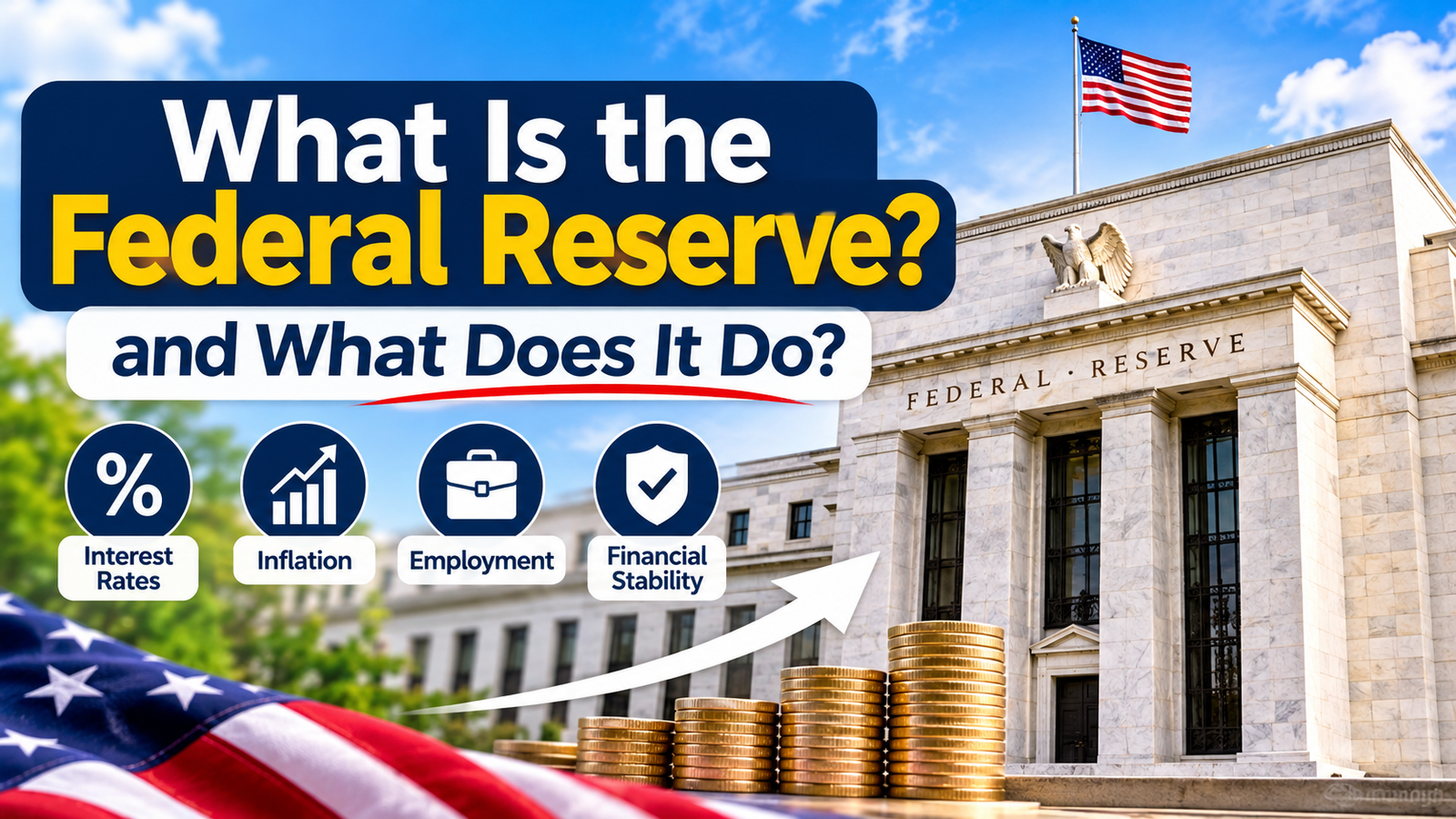
The Federal Reserve, often called the Fed, is the central bank of the United States. It helps manage the country’s monetary system, influences interest rates, supports financial stability, supervises certain banks, and helps keep the nation’s payment systems operating smoothly. Its decisions affect the broader economy, including borrowing costs, savings interest, employment, inflation, and access to credit. Although the Federal Reserve does not control every part of the economy, it plays an important role in how money moves through the financial system. Understanding what the Federal Reserve is and what it does can help individuals better understand economic news, changes in interest rates, and the financial conditions that affect everyday life.
What Is the Federal Reserve?
The Federal Reserve System is the central banking system of the United States. It was established by Congress to provide a more stable and flexible monetary and financial system.
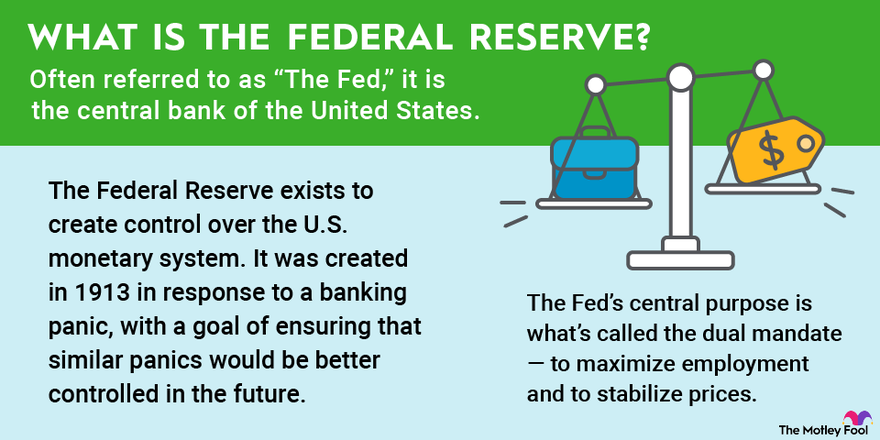
Before the Federal Reserve existed, the United States experienced periods of financial instability, including banking panics that made it difficult for people and businesses to access their money. Congress created the Federal Reserve through the Federal Reserve Act of 1913 to help address weaknesses in the banking system.
The Federal Reserve is not simply one bank located in Washington, DC. It is a nationwide system with several connected parts that share responsibility for monetary policy, banking oversight, and financial stability.
Its main components include:
- The Board of Governors: A federal government agency in Washington, DC, responsible for overseeing the Federal Reserve System.
- The 12 Federal Reserve Banks: Regional institutions that support the banking system, conduct economic research, and provide financial services.
- The Federal Open Market Committee (FOMC): The group responsible for setting the direction of US monetary policy, including decisions about the target range for the federal funds rate.
The Federal Reserve operates with a degree of independence from day-to-day political influence, but it is accountable to Congress. Its structure is designed to balance national economic responsibilities with regional perspectives.
What Are the Main Responsibilities of the Federal Reserve?
The Federal Reserve has several important responsibilities. These functions work together to support a stable financial system and a healthy economy.
1. Conducting Monetary Policy
One of the Federal Reserve’s most important responsibilities is conducting monetary policy. Monetary policy refers to actions taken by a central bank to influence money and credit conditions in the economy.
The Fed uses monetary policy to pursue its congressional goals of maximum employment and stable prices. It also works to promote moderate long-term interest rates.
For example, when inflation is too high, the Federal Reserve may tighten monetary policy by raising its target range for the federal funds rate. Higher borrowing costs can reduce spending and borrowing across the economy, which may help ease inflationary pressure over time.
When economic activity is weak, the Fed may lower interest rates or use other monetary policy tools to support borrowing, spending, and investment.
Monetary policy does not produce immediate results. Its effects can take time to spread through banks, businesses, households, and financial markets.
2. Promoting Financial Stability
The Federal Reserve monitors financial conditions to identify risks that could threaten the broader financial system.
Financial stability means that banks, financial markets, payment systems, and other important institutions can continue functioning even when economic conditions become difficult.
Potential threats include:
- Excessive borrowing and financial risk-taking.
- Problems affecting major financial institutions.
- Disruptions in credit markets.
- Banking sector stress.
- Unexpected economic shocks.
The Federal Reserve works with other government agencies to monitor these risks and support the resilience of the financial system.
However, it cannot prevent every financial crisis or guarantee that banks and financial markets will never experience problems.
3. Supervising and Regulating Banks
The Federal Reserve supervises certain banks and financial institutions to help ensure that they operate safely and comply with applicable banking laws and regulations.
Its responsibilities include examining financial institutions, reviewing risk management practices, and monitoring whether banks maintain appropriate capital and liquidity.
Capital refers to financial resources that help a bank absorb unexpected losses. Liquidity refers to its ability to meet financial obligations when payments are due.
The Federal Reserve also plays a role in supervising bank holding companies and certain other financial organizations.
Importantly, the Fed is not the only US banking regulator. Other agencies, including the Office of the Comptroller of the Currency (OCC), the Federal Deposit Insurance Corporation (FDIC), and state banking authorities, share responsibility for banking oversight.
4. Supporting the Payment System
The Federal Reserve helps maintain the systems that allow money to move between banks and financial institutions.
When someone receives a paycheck through direct deposit, sends money electronically, or makes certain bank payments, payment systems help transfer funds between accounts.
The Federal Reserve provides payment and settlement services to eligible financial institutions. It also operates and supports important payment infrastructure, including services for electronic transfers and check processing.
These systems are important because businesses and individuals depend on reliable payments to conduct everyday financial activities.
How Does the Federal Reserve Control Interest Rates?
Interest rates are one of the most widely discussed parts of Federal Reserve policy. Changes in the Fed’s policy decisions can influence borrowing and saving costs throughout the economy.
A key interest rate is the federal funds rate. This is the interest rate at which eligible depository institutions lend reserve balances to one another overnight, generally on an unsecured basis.
The Federal Reserve does not directly set every interest rate that consumers encounter. Instead, it establishes a target range for the federal funds rate and uses monetary policy tools to help keep the market rate within that range.
Changes in the federal funds rate can influence other interest rates, including:
- Credit card interest rates.
- Certain adjustable-rate mortgage rates.
- Auto loan interest rates.
- Business borrowing costs.
- Interest rates on some savings accounts and certificates of deposit.
The relationship is not always immediate or identical across financial products. Lenders consider several factors when setting rates, including credit risk, market conditions, operating costs, and the length of a loan.
What Happens When the Fed Raises Interest Rates?
When the Federal Reserve raises its target range, borrowing can become more expensive.
Households may face higher interest costs on certain loans, while businesses may reconsider borrowing for expansion or new projects.
Higher rates can also encourage saving because some financial institutions may offer more attractive deposit rates.
Over time, reduced borrowing and spending may help slow economic activity and reduce inflationary pressure.
What Happens When the Fed Lowers Interest Rates?
When the Federal Reserve lowers its target range, borrowing costs may decline.
This can make some loans more affordable and encourage households and businesses to borrow, spend, and invest.
However, lower interest rates can also mean reduced interest earnings on certain savings products. The actual effect depends on the financial institution and the type of account.
How Does the Federal Reserve Affect Everyday Americans?
The Federal Reserve may seem like an institution that only deals with banks and financial markets, but its decisions can influence ordinary financial activities.
Its policies can affect the cost of borrowing, the return on savings, employment conditions, and the prices consumers pay for goods and services.
Here are some common examples.
1. Mortgage and Housing Costs
Changes in Federal Reserve policy can influence mortgage rates, but the relationship is indirect.
Fixed-rate mortgage rates are influenced by longer-term Treasury yields, mortgage-backed securities markets, inflation expectations, and other economic factors.
Adjustable-rate mortgages may be more directly affected by changes in short-term interest rates, depending on their terms and reference rates.
2. Credit Card and Loan Payments
Many credit cards have variable interest rates. When short-term market rates rise, credit card interest rates may also increase.
This can make carrying a credit card balance more expensive.
Some personal loans and other borrowing products may also be affected by changes in overall interest rate conditions.
3. Savings Account Interest
The Federal Reserve’s policy decisions can influence the interest rates financial institutions offer on savings accounts and other deposit products.
When market rates rise, some banks may increase deposit rates. When rates fall, some banks may reduce them.
However, banks do not always adjust their rates immediately or by the same amount.
4. Inflation and Employment
The Federal Reserve aims to maintain stable prices while supporting maximum employment.
Inflation reduces the purchasing power of money because consumers may need to spend more to purchase the same goods and services.
Monetary policy can influence overall demand in the economy, which may affect inflation and employment over time. However, inflation can also be influenced by factors outside the Fed’s control, such as supply disruptions, energy prices, and global events.
How Does the Federal Reserve Make Decisions?
The Federal Open Market Committee, commonly called the FOMC, is responsible for making important US monetary policy decisions.
It includes the seven members of the Board of Governors, the president of the Federal Reserve Bank of New York, and a rotating group of presidents from the other Federal Reserve Banks.
The FOMC evaluates economic information before making decisions.
Its considerations include:
- Inflation trends and consumer prices.
- Employment and unemployment conditions.
- Economic growth.
- Consumer and business spending.
- Financial market developments.
- International economic conditions.
The committee meets regularly to review these conditions and determine whether monetary policy should change or remain the same.
After meetings, the Federal Reserve publishes policy statements and other information explaining its decisions. The Chair of the Federal Reserve also communicates with the public and Congress about monetary policy and economic conditions.
These communications help financial markets, businesses, and households understand how policymakers view the economy.
What the Federal Reserve Cannot Do
Although the Federal Reserve has significant influence over the US economy, its authority has limits. Understanding these limitations helps explain why its decisions do not always produce the results people expect.
The Federal Reserve cannot:
- Directly determine the price of every product or service.
- Guarantee that everyone who wants a job will find one.
- Set the interest rate on every mortgage, credit card, or savings account.
- Eliminate every recession or prevent all financial crises.
- Control government spending or independently determine federal tax policy.
The Fed also cannot solve every cause of inflation. For example, if a shortage of fuel or food pushes prices higher, changing interest rates cannot directly increase the available supply of those products.
Monetary policy works mainly by influencing financial conditions and overall economic demand. Its effectiveness depends on economic circumstances, and its effects are not always predictable.
Two Hypothetical Examples of How the Federal Reserve Works
The following examples illustrate how Federal Reserve decisions can influence financial activity. They are hypothetical and do not represent current interest rates or actual financial outcomes.
Example 1: How a Federal Reserve Rate Increase Can Affect Borrowing
Imagine the Federal Reserve raises its target range for the federal funds rate because inflation remains elevated.
A consumer has a credit card with a $1,000 outstanding balance and a variable interest rate. If the card issuer increases that rate in response to changing market conditions, carrying the balance may become more expensive.
The consumer’s actual interest charges will depend on the card agreement, the rate adjustment, and the outstanding balance.
This example shows how a Federal Reserve policy decision can indirectly affect everyday borrowing costs.
Example 2: How Federal Reserve Services Support Bank Payments
Imagine someone deposits a $1,000 paycheck into a checking account.
The person’s bank records the deposit and makes the funds available according to applicable banking and payment rules. Behind the scenes, financial institutions may use payment and settlement systems to transfer funds between accounts.
The Federal Reserve operates important payment infrastructure that helps participating financial institutions settle certain transactions.
The Federal Reserve does not personally receive the individual’s paycheck or maintain an ordinary checking account for that person. Instead, its payment services help support the broader banking system.
Key Takeaways
- The Federal Reserve is the central bank of the United States, established in 1913.
- Its main monetary policy goals are maximum employment and stable prices.
- The Federal Open Market Committee makes important monetary policy decisions.
- Federal Reserve policies can influence borrowing costs, savings rates, inflation, and employment.
- The Fed supervises certain financial institutions and supports the US payment system, but it cannot control every economic outcome.
Frequently Asked Questions About the Federal Reserve
1. Is the Federal Reserve owned by the US government?
The Federal Reserve has a unique structure. Its Board of Governors is a federal government agency accountable to Congress, while the 12 regional Federal Reserve Banks have a different organizational structure established by law. The System combines public oversight with regional operating institutions. It is not a conventional private company, and its policy decisions are not directed by private shareholders.
2. Does the Federal Reserve print US money?
The Federal Reserve plays an important role in the nation’s currency system, including distributing currency through the banking system and managing the supply of currency in circulation. However, physical US currency is printed by the Bureau of Engraving and Printing, which is part of the US Department of the Treasury. Coins are produced by the US Mint.
3. Does the Federal Reserve control inflation?
The Federal Reserve influences inflation through monetary policy, primarily by affecting interest rates and financial conditions. Higher interest rates can reduce borrowing and spending, potentially easing inflationary pressure. However, inflation is also affected by supply shortages, energy costs, international events, and other factors. The Fed can influence inflation but cannot control every factor that causes prices to change.
4. What is the difference between the Federal Reserve and the FDIC?
The Federal Reserve is the US central bank and is responsible for monetary policy, financial stability, and supervising certain financial institutions. The Federal Deposit Insurance Corporation (FDIC) is a separate federal agency that insures eligible deposits at insured banks and performs other banking oversight and resolution responsibilities. Their roles are different, although both contribute to the stability of the US banking system.
5. Can ordinary Americans open accounts at the Federal Reserve?
No. Ordinary individuals cannot open personal checking or savings accounts directly with the Federal Reserve. Its banking services are primarily provided to eligible depository institutions and the federal government. Consumers generally maintain deposit accounts with commercial banks, credit unions, and other financial institutions rather than with the Federal Reserve.
Conclusion
The Federal Reserve plays a central role in the US economy by managing monetary policy, supporting financial stability, supervising certain banks, and maintaining important payment systems. Its decisions can influence interest rates, inflation, employment, borrowing, and saving conditions, although it does not control every part of the economy. Understanding what the Federal Reserve does makes it easier to interpret economic news and recognize how central banking decisions can affect everyday financial activities. Its responsibilities and limitations are both important parts of understanding the American financial system.
Sources and Further Reading
For additional information, consult these official US government resources:
- Federal Reserve – The Fed Explained – Overview of the Federal Reserve’s structure and responsibilities.
- Federal Reserve – Purposes and Functions – Detailed explanation of central banking responsibilities.
- Federal Reserve – Federal Open Market Committee – Information about monetary policy decisions.
- FDIC – Deposit Insurance – Explanation of the FDIC’s role in protecting eligible bank deposits.
- US Currency Education Program – Information about how US currency is produced and distributed.
Disclaimer
Disclaimer: This article is for educational purposes only and is not financial, investment, tax, or legal advice. The information provided is general in nature and does not consider your personal circumstances. We make no guarantees, promises, or representations about returns, profits, savings, credit outcomes, or any other results. All examples are hypothetical and for illustration only. Financial rules, interest rates, tax brackets, contribution limits, and fees change over time, so this article does not state current figures; please check official sources such as IRS.gov, SEC.gov, Investor.gov, CFPB, or the Federal Reserve for the latest information. Consult a qualified professional, such as a certified financial planner, tax professional, or attorney, before making financial decisions.
About the Author
About the Author: [Author Name] is [credentials/experience in finance, writing, or research]. [One or two sentences about expertise.]
SEO Details (Separate from Article)
Meta title: What Is the Federal Reserve? How It Works
Meta description: Learn what the Federal Reserve does, how it influences interest rates and inflation, and why its decisions matter to everyday Americans.
Suggested URL slug:
what-is-the-federal-reserve
5 Related Keywords:
- Federal Reserve explained
- How the Federal Reserve works
- Federal Reserve interest rates
- What is monetary policy
- Federal Reserve and inflation
Editorial check: The article explains the Fed’s structure, responsibilities, monetary policy, interest rates, everyday economic effects, and limitations. It includes two hypothetical examples, five FAQs, official reference sources, and the exact requested disclaimer. It avoids current rate figures, personal financial recommendations, and guaranteed outcomes.